


You've probably seen "Halal-Certified" sitting quietly on our packaging next to "vegan" and "cruelty-free," and scrolled past it without a second thought. Fair enough — most skincare brands don't explain what the badge is actually checking for, so it's easy to assume it's decorative, or only relevant if you're shopping specifically for halal products.
It isn't decorative. It's one of the more rigorous checks a skincare formula can go through, and it's a big part of why we're comfortable calling Velettà genuinely clean skincare rather than just marketing it that way.
Halal certification isn't a skincare-specific idea — it's borrowed from food safety
Halal, in the context of consumer goods, means "permissible" under Islamic law. Most people associate it with food, but the same principles apply to anything applied to or absorbed by the body, which is exactly what skincare is. A halal-certified product has been independently audited to confirm it contains no haram (impermissible) ingredients and hasn't been contaminated by them during manufacturing.
For skincare, that audit typically checks for:
- No alcohol used as a solvent, preservative, or fragrance carrier (a genuinely difficult constraint, since ethanol is one of the cheapest, most common ingredients in modern cosmetic formulation).
- No animal-derived ingredients sourced from non-halal slaughter — collagen, gelatin, and certain fatty acids are common offenders in conventional skincare.
- No cross-contamination during manufacturing, which means the facility itself, not just the ingredient list, has to pass inspection.
- Traceable sourcing for every raw ingredient, so the certifying body can verify claims rather than take a brand's word for it.
That last point is the one people underestimate. Halal certification is a third-party audit trail. It's not self-declared, and it doesn't get renewed automatically — the facility and formulas get checked again, not just signed off once and forgotten.
Why this mattered to us specifically
Velettà was built for skin that has lived — skin that's often more reactive, more easily irritated, and less forgiving of unnecessary extras than it used to be. Alcohol-based formulas are a particularly common culprit behind that tight, stripped feeling so many of us notice more as we get older, especially through drier months. Aiming for halal certification meant ruling out alcohol as a formulation shortcut from day one, which pushed us toward the plant oils and natural emulsifiers that now define the range, rather than the other way around.
It also meant our sourcing had to hold up to outside scrutiny, not just our own standards. We think that's worth being transparent about. You can read more about the full list of what we formulate without on our ethos page, and see exactly what's in each formula on our ingredients glossary.
Do you have to be Muslim to want halal-certified skincare?
No. This is one of the biggest misconceptions about the certification, and it's a shame, because the constraints it enforces benefit anyone with sensitive or reactive skin. If you've ever reacted to a "natural" product and been confused about why, alcohol-based fragrance carriers are a common, overlooked cause. Choosing halal-certified skincare is, in practice, a reasonably reliable shortcut to avoiding a specific category of common irritants — whatever your reason for choosing it.
That said, for our customers who do choose products specifically because they're halal, we know the stakes are higher than "does this feel nice on my skin." It's a values decision, and a values decision deserves proof, not a badge with no explanation behind it. That's the gap this article is meant to close.
How it's different from "vegan" or "cruelty-free"
These three labels get grouped together so often that people assume they're interchangeable, but they're checking different things:
- Vegan confirms no animal-derived ingredients or byproducts at all — but says nothing about alcohol content or how the product was manufactured.
- Cruelty-free confirms no animal testing — but a product can be cruelty-free and still contain animal-derived ingredients (from non-tested sources) or alcohol.
- Halal-certified confirms no alcohol, no haram animal-derived ingredients, and an audited, traceable manufacturing process.
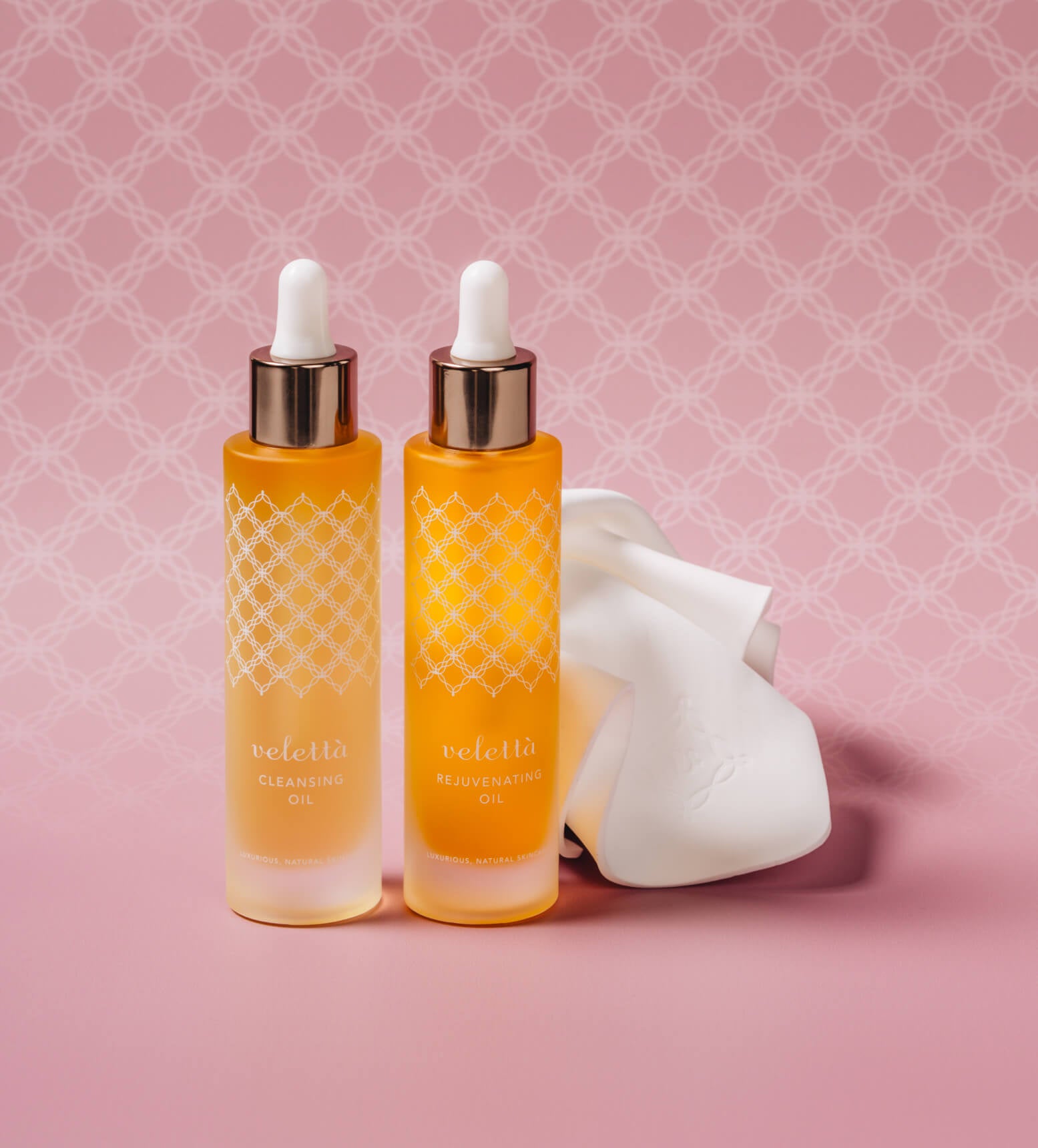
Velettà products carry all three, which is a fairly unusual combination — most brands optimise for one or two, because meeting all three simultaneously narrows your formulation options considerably. It's part of why our Cleansing Oil and Rejuvenating Oil lean so heavily on plant oils rather than the alcohol-based "quick absorb" finishes common in conventional facial oils — that finish had to be earned through formulation, not shortcut chemistry.
What this means for how you use your Velettà products
Practically, nothing changes about how you use the range — but it does explain a few things people occasionally ask us about:
- Why our oils feel richer, not lighter. Alcohol is often used to make oils feel like they "sink in" faster. Without it, absorption relies on massage and warmth from your hands, which is part of why we built our rituals around a slower, more deliberate application.
- Why our scent is more subtle than some fragranced ranges. Many synthetic fragrance carriers are alcohol-based. Ours are built into the plant oils themselves.
- Why sensitive and reactive skin tends to tolerate the range well. This isn't a guarantee — always patch-test anything new — but removing alcohol as a formulation option removes one of the more common triggers for stinging and tightness.
A note on trust
We're not going to pretend every customer needs to care about this the way we do. But we'd rather explain the "why" behind what's on our packaging than let it sit there as an unexplained badge.
Quick FAQ
What does halal-certified mean in skincare? It means an independent body has audited both the formula and the manufacturing process to confirm there's no alcohol, no non-halal animal-derived ingredients, and no contamination risk during production.
Is halal-certified skincare only for Muslim consumers? No. The certification is a values-based choice for many customers, but the underlying formulation constraints (no alcohol, traceable sourcing) benefit anyone with sensitive or reactive skin.
Is halal skincare the same as vegan skincare? No. Vegan confirms no animal ingredients; halal certification additionally confirms no alcohol and an audited, traceable manufacturing process. A product can be one without the other.
Does halal-certified skincare cost more to make? Often, yes — it narrows formulation options and requires ongoing third-party auditing rather than a one-off declaration, which is part of why it's less common across the industry than "vegan" or "natural" labelling.
Are all Velettà products halal-certified? Yes, the full Velettà range is formulated and certified to this standard, alongside being vegan and cruelty-free.